Two methods that were made for each other
Time blocking and the Pomodoro Technique solve two halves of the same problem. Time blocking answers "when will I do this work?" while Pomodoro answers "how do I stay focused once I start?" Used together, you get a plan for the day and a rhythm inside every block.
Think of it as a sandwich: time blocking is the bread that decides what happens when, and Pomodoro is the filling that keeps you working through each slice. One without the other leaves either a plan with no focus or focus with no plan.
A quick refresher on Pomodoro
The Pomodoro Technique breaks work into focused sprints, classically 25 minutes, followed by a short 5-minute break, with a longer break after four sprints. The timer creates a sense of urgency, makes starting feel small, and protects you from burning out by forcing regular rest.
The psychology is simple but powerful. A 25-minute sprint is short enough that your brain does not rebel against starting, and long enough to make real progress. The break is not wasted time; it is what allows the next sprint to be sharp instead of drained.
The combined workflow
Here is how the two methods fit together in practice:
- Time block a 90-minute deep-work session on your calendar in the morning.
- Inside that block, run three Pomodoro sprints with short breaks between them.
- Use the breaks to stand, hydrate, and look away from the screen, never to check email.
- If you finish early, bank the extra time as buffer instead of squeezing in more.
- At the end of the block, mark it complete and log how many sprints you actually finished — that number becomes your honest measure of focused output.
When Pomodoro is the wrong tool
Pomodoro is not a universal hammer. If you are in a deep flow state, stopping at the 25-minute mark can do more harm than good. In that case, let the sprint run long or switch to longer intervals; the timer is a starting aid, not a police officer.
It is also the wrong tool for meetings, phone calls, and other activities you cannot pause. Reserve the timer for solo work that benefits from a hard start and a visible endpoint.
Tuning sprints to your day
The classic 25/5 rhythm is a default, not a rule. Many people do better with longer sprints, and the right length depends on the task:
Whichever you choose, keep the two key ingredients: a visible countdown and a real break. That combination is what makes starting feel small and finishing feel real.
- 25 minutes / 5 minutes — perfect for email, admin, and tasks you resist starting.
- 50 minutes / 10 minutes — better for writing, coding, and study sessions that need more warm-up time.
- 90 minutes / 20 minutes — for deep work that rewards sustained attention, matching your calendar's deep-work blocks.
Why app-switching kills the flow
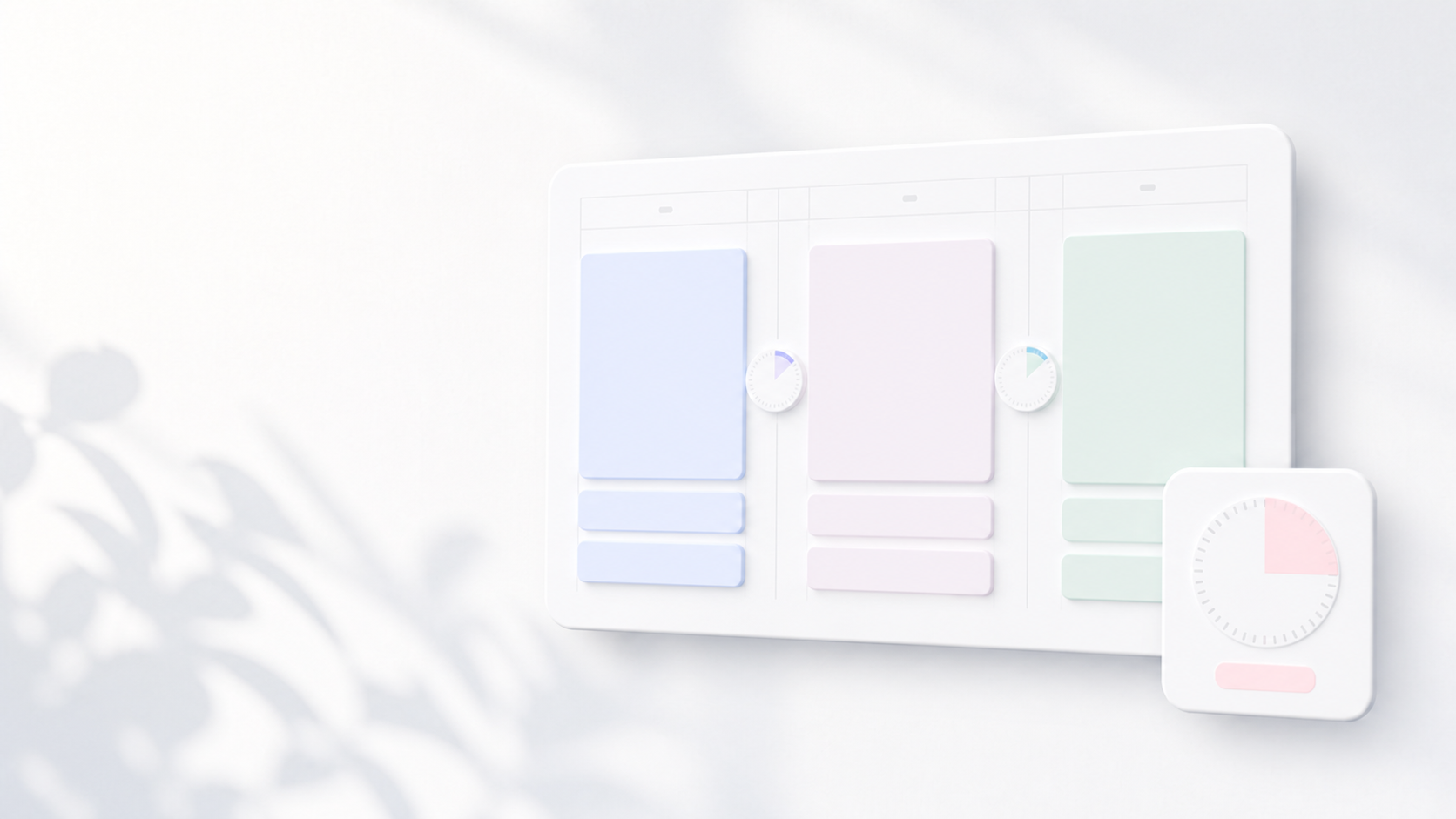
The classic mistake is running your calendar in one app and your timer in another. Every switch is a chance to get distracted and lose the thread. ChronoBlock builds the Pomodoro timer directly into the time-blocking view, so you start a focused session on the block you are already looking at, switch break lengths without leaving the app, and keep your attention anchored on one screen from plan to focus to finish. Try ChronoBlock free — one screen, one rhythm, zero switching.
Match the Timer to the Work
The familiar 25-minute focus and five-minute break cycle is a starting point, not a rule. Short intervals help with activation and repetitive tasks. Writing, design, and programming may benefit from 45–60 minutes because the work has a longer warm-up period. Choose the interval that protects attention without forcing an artificial stop at the most productive moment.
Use breaks for actual recovery. Stand up, drink water, look away from the screen, or take a short walk. Opening a social feed often replaces one form of stimulation with another and makes the next focus interval harder to begin.
- 15–25 minutes for difficult starts.
- 25–40 minutes for routine knowledge work.
- 45–60 minutes for deeper creative work.
- Use screen-free breaks when possible.
What to Do When the Block and Timer Do Not Match
A calendar block describes the time available; a Pomodoro describes the rhythm inside it. A 90-minute block might contain two 35-minute focus sessions, two short breaks, and a final review. Do not force a block to equal one timer interval.
When the timer ends, record a quick status before deciding what happens next. Finish if the outcome is complete, start another interval if the block still has room, or note the next action and reschedule it. This makes the timer a decision point rather than an interruption.