Time blocking defines when work happens
Time blocking is about placing work on a calendar. You decide that writing happens from 9:00 to 10:30, email from 11:00 to 11:30, and exercise at 17:30. It is especially useful for seeing whether your priorities can fit into the day and for protecting focus from meetings and interruptions.
A time block can be flexible. If a task takes longer, you may move the next block. The calendar is a map of intended attention, not a stopwatch that marks the day as failed.
Timeboxing defines how long work may take
Timeboxing puts a hard limit around a task or activity. You might give yourself 25 minutes to outline an article, 45 minutes to clear email, or two hours to explore a design. The box prevents perfectionism and keeps an open-ended task from consuming the rest of the day.
Timeboxing is useful when a task expands to fill available time. It creates a finish line, after which you review the result and decide whether another box is worth spending.
Use both methods together
The methods work well as a pair: time blocking chooses when to work, and timeboxing chooses the maximum duration. Put “outline article” on the calendar from 9:00 to 9:45, set a 45-minute timer, and stop to review when the box ends. This gives your day structure without asking every task to be perfect.
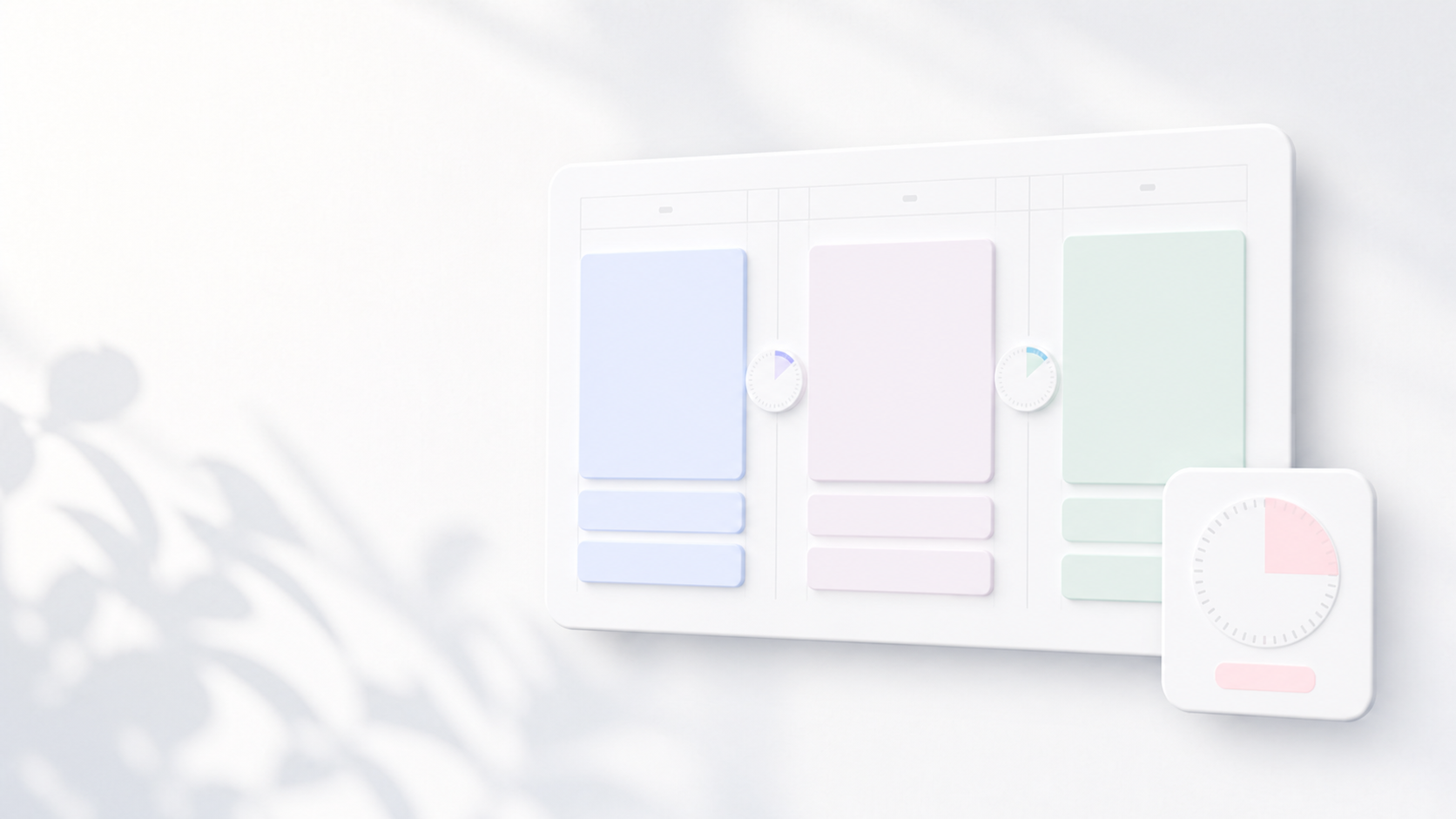
ChronoBlock supports the combined workflow with a visual schedule and an in-block focus timer. Plan the block, start the timer, and move on when the session ends.